
Cleaning out old laptops in a Center City office, or clearing a closet full of retired desktops in a Philly rowhome? Those old drives can hold years of private data.
Hard Drive Shredding on-site means a mobile shredding truck comes to your address and destroys the drives right there. You can watch the process, reduce the risk of drives getting lost in transit, and walk away with paperwork that supports your records. It’s a simple service, but it feels like a huge weight off your shoulders once it’s done.
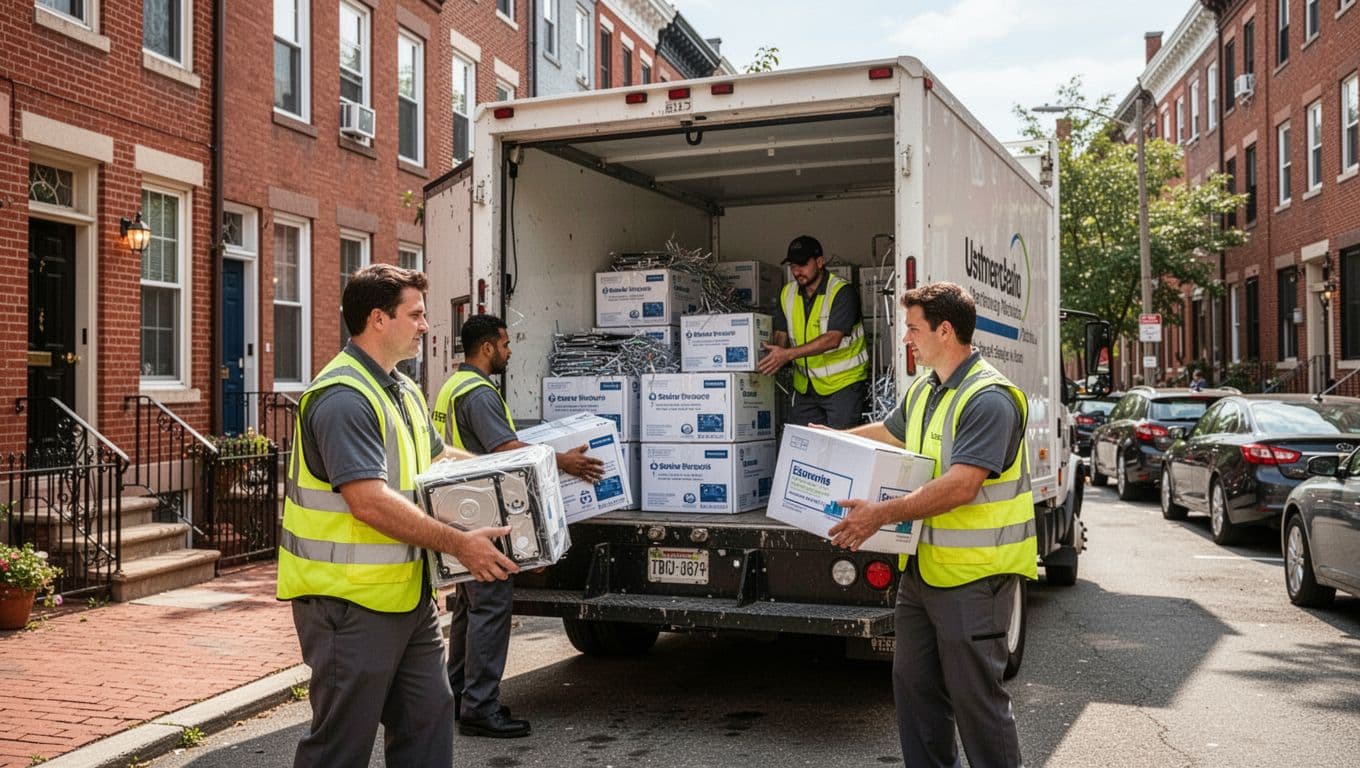 Mobile shredding crews can destroy drives at your Philadelphia location, created with AI.
On appointment day, the crew arrives with a secure truck and confirms where the work will happen. Many Philadelphia providers run the job with NAID-style chain-of-custody practices, which means clear handoffs, logs, and tight control from start to finish.
Next, you’ll review the work order and your drive count. Then the team moves your boxed drives to the truck, usually staying in your sight. If your site has tight parking or a loading dock, they’ll adjust the approach to match building rules.
After that, the truck’s shredder does the actual destruction. You can observe the process, either directly at the truck or from a safe viewing spot, depending on your location. The end result looks like broken metal and mixed fragments, not something anyone can reassemble or read.
Finally, you get documentation before the crew leaves, so you’re not waiting days to close the loop.
 Staging drives and a simple inventory list helps the appointment move quickly, created with AI.
First, pull HDDs and SSDs from desktops, laptops, servers, and external drives. Then build a simple inventory list. Serial numbers help, so capture them when you can. Also pick a staging area near the best access point (loading dock, driveway, or curbside). Lastly, assign one on-site contact who can approve the count and answer questions fast.
The crew typically checks IDs, confirms the work order, and matches your inventory to what they received. If serial numbers are part of the job, they’ll log them against your list.
Then the shredding happens on the truck. “Shredded” means the drive gets torn into small pieces, so the platters or chips can’t be used again. Right after, you receive a Certificate of Destruction, often with date, time, and other tracking details you can file for audits.
If you need proof for compliance or internal policy, ask what fields appear on the Certificate of Destruction before scheduling.
A quick call can prevent surprises. Start by confirming they shred both HDDs and SSDs, since SSDs can require smaller shred sizes. Next, ask what happens to the shredded material. Reputable vendors send scrap to responsible electronics recyclers, not the trash.
Ask these in plain English:
Pricing usually depends on drive count, travel, and minimum truck fees. Rush service can raise the total. Parking limits, elevators, or long carries can also add labor time. Many companies bundle extras like asset inventory or other media destruction. As a general expectation, on-site service often lands around $5 to $15 per drive, with volume discounts for larger batches.
Philadelphia sites vary a lot, from high-rises to tight side streets. So, plan access early and keep the drives organized. Box and label drives by department or location, then keep your inventory list close. Also make sure any devices you plan to keep have had their drives removed.
Reserve a truck spot if needed, confirm building rules and elevator access, and stage boxed drives near the pickup point. Keep your inventory list and a pen ready. Assign someone to witness the destruction. Before the crew arrives, double-check you didn’t miss a drive in a “to-keep” computer.
On-site hard drive shredding in Philadelphia is quick, visible, and reassuring, because you can watch your data get destroyed. With solid chain-of-custody habits and the Certificate of Destruction in hand, you’ll have proof that the job is done. Next step, count your drives, note any SSDs, and request a quote or schedule a truck visit.